Lesson: Foundations
The subscription stack
Most businesses live in a patchwork of rented databases wired together by middlemen. Learn to see yours, and to tell what to rent, what to own, and what to copy first.
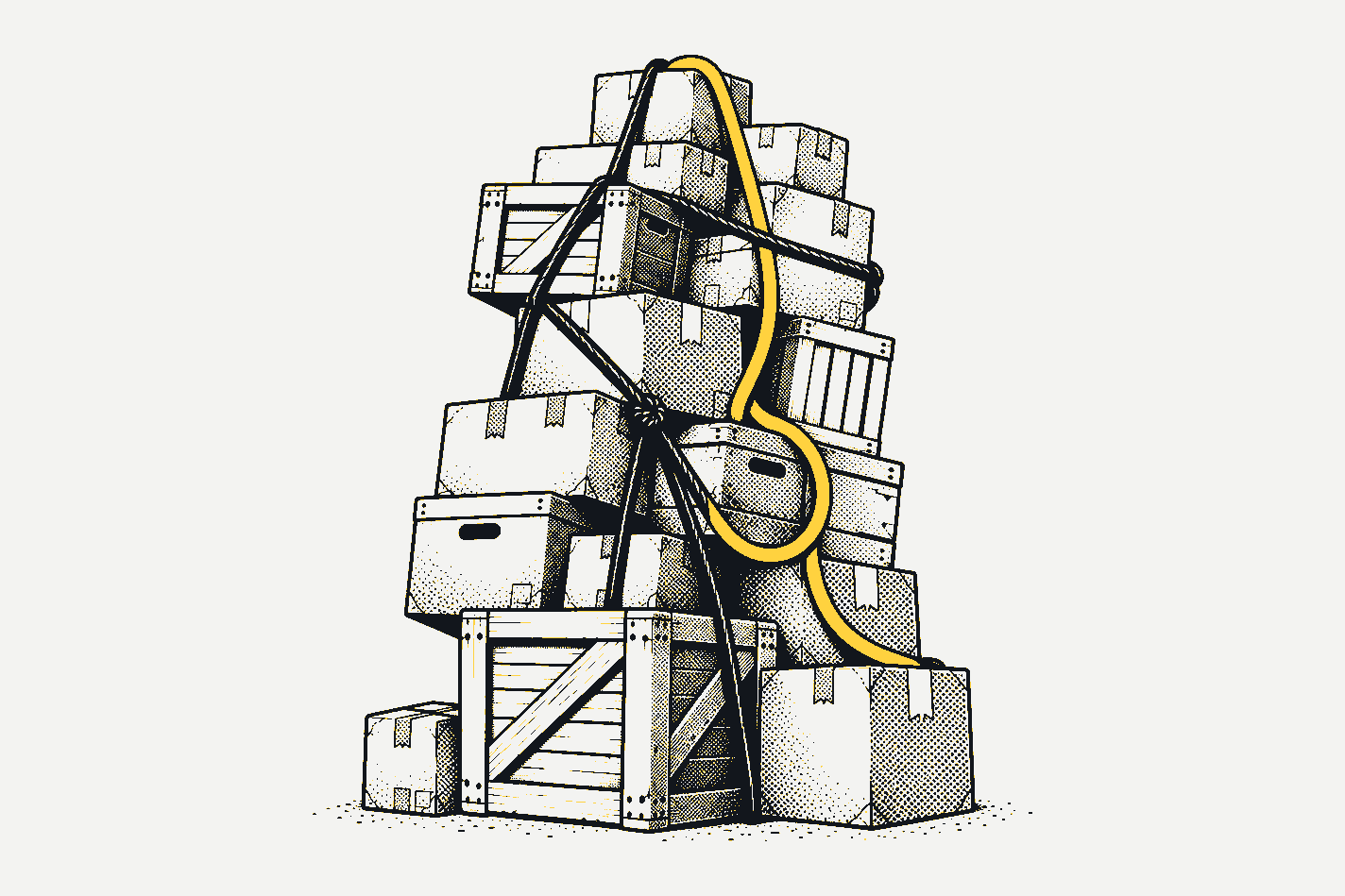

The patchwork is the thing to learn to see. Most businesses live in one, and most don’t know it’s a set of rented databases wired together by middlemen.
One stack, seen as databases
This is a composite of real businesses. Every pain in it happened to someone; no detail points to one business.
| Layer in the stack | What it really is | Own it? |
|---|---|---|
| The big ERP | a database with a great many screens, most of them unused | maybe, later: a long project, and only when owning pays |
| Own web stores and marketplaces | where the customers are | keep renting: the network is the product |
| Connectors between the systems | API calls; middlemen | own: an agent can write and test these |
| Shipping-rate tool | a middleman for the carriers’ APIs, plus discounted rates | count first: those rates may be worth the rent |
| Stock-reorder tool | a formula over your own stock data | own: your data, your rules |
| Print bridge | a patch for something the big system won’t do | own: a small script |
| Product-data hub | your catalog, sent out to every channel | own: it’s the heart of the business |
| Analytics | queries and charts over your own data | mirror first; charts are easy once the data is yours |
| CRM, task board | shared tools with good screens | keep, unless they trap your data |
| Password manager, payroll | problems everybody shares, with security and compliance | keep renting |
The table teaches judgement, not dogma: four rows say “keep.” That’s the duality in practice, and it’s what makes the other rows believable.
The rent-or-own check
One tool at a time. It works as a printable list, no software needed.
| Question | If yes, lean toward |
|---|---|
| Do many businesses use it exactly the way you do? | rent |
| Does a law or a customer need a certified vendor for it? | rent |
| Is it useful mainly because everyone else is on it? | rent |
| Is it how you do things differently from your competitors? | own |
| Do you pay for lots of features you never use, or glue it to other tools with middlemen? | own, one step at a time |
| If the vendor vanished tomorrow, could you keep working? | if no: at least mirror your data now |
Take-home
The subscription audit. It works on paper or in a spreadsheet, no code. Write one row for each tool you pay for, and for each one write down five things:
- What it costs per year.
- What data it holds.
- Whether you can export all of it, and in what format.
- What would stop if it vanished tomorrow.
- Whether to rent, own, or mirror first.